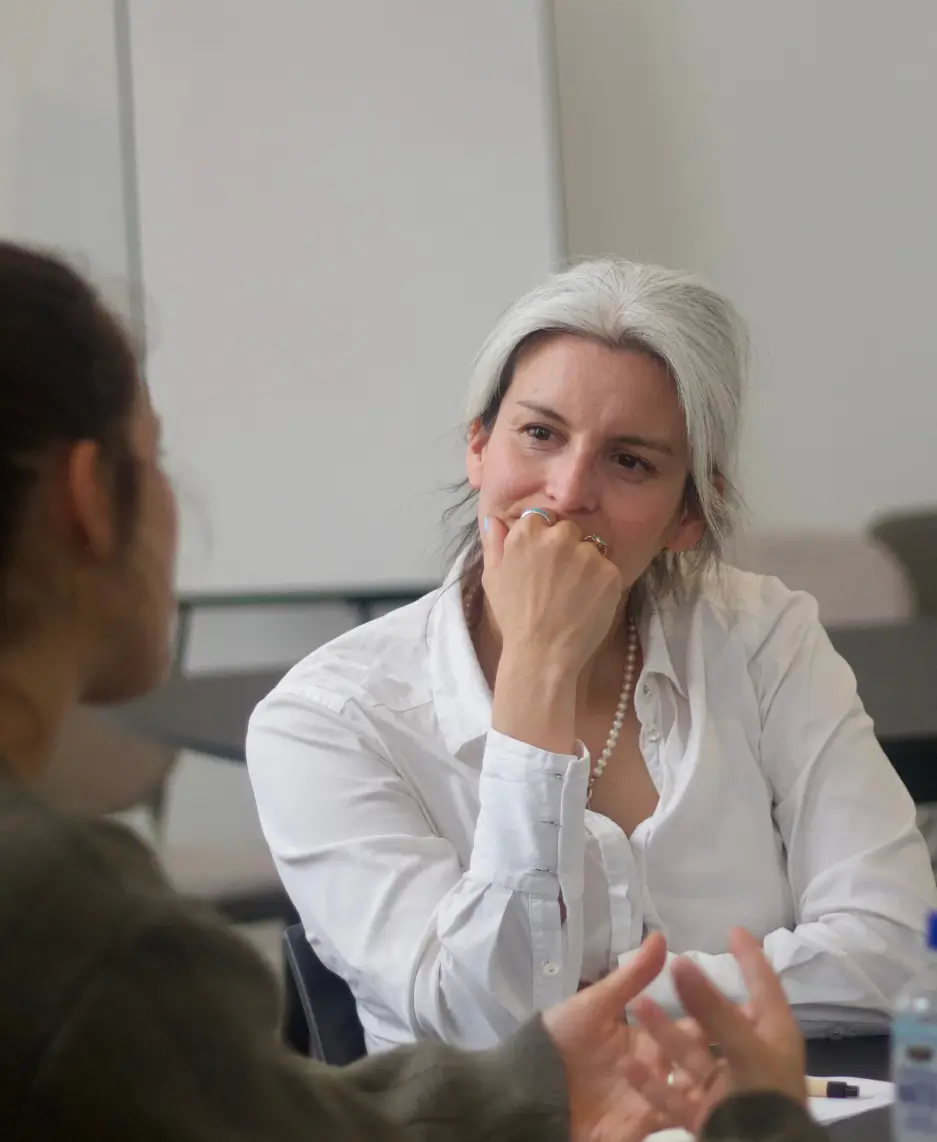


“Comparing my views on work and life during the workshop was a wake-up call. I realized how my perception of work needs to evolve for my life to truly move forward.”
Redesigning Your Life: Stepping Back Before Moving Forward
As Charlotte entered her thirties, she found herself at a point many professionals eventually reach: a quiet realization that the path they had been following no longer felt entirely their own.
After several years in a corporate environment, she had achieved stability and professional growth. Yet something was missing. The life she had carefully built no longer fully reflected what she valued most.
Instead of pushing through the discomfort, Charlotte decided to pause. Rather than searching for quick answers, she began looking for a space where she could step back, reflect, and explore how to move forward more intentionally.
Why Charlotte Chose Designing Your Life
While exploring opportunities for personal growth, Charlotte came across Designing Your Life, a framework developed at Stanford University that applies design thinking principles to life and career decisions.
Already familiar with design thinking through her work, the concept immediately resonated with her. When she noticed upcoming workshops in Europe, her curiosity grew.
Before signing up, she researched the facilitators and discovered Adis Sophie through LinkedIn and a podcast interview. What stood out to her was the balance between empathy and practicality.
The workshop’s emphasis on experimentation particularly appealed to her. Instead of focusing only on reflection, the program offered concrete tools and exercises designed to help participants test new ideas and take action.
For Charlotte, this combination felt promising: space to think deeply about her life, paired with practical methods to turn insight into decisions.
What Surprised Her Most
From the beginning, the workshop environment felt different from what Charlotte expected. The atmosphere was informal and welcoming, designed to encourage interaction rather than passive learning.
The facilitation style balanced structure with openness. Personal experiences were shared not as instructions, but as examples that helped spark reflection.
Participants came from different professional backgrounds and life stages, yet many were navigating similar questions about work, direction, and meaning.
This sense of psychological safety allowed Charlotte to open up more freely.
“It wasn’t just about reflection,” she explained. “The community pushed me to think bigger, take braver steps, and let go of fears I hadn’t questioned before.”
Through conversations and group exercises, she began seeing her challenges from new angles. Sharing ideas with others often shifted her perspective in ways she had not expected.
Life After the Workshop
One of the most tangible changes came shortly after the program.
Charlotte decided to make a significant change in her living situation. Instead of treating the move as a dramatic life decision, she approached it as an experiment, applying the program’s concept of prototyping to real life.
“It became a real-life prototype,” she said. “A way to test a different rhythm of living.”
Since then, she has continued exploring new professional directions while working on projects that feel more aligned with her interests and values.
The brainstorming techniques from the workshop remain part of her process, helping her generate possibilities rather than feeling trapped by a single “right” answer. Travel has also become an important part of her exploration, giving her space to reflect on what kind of life she wants to design.
Is Designing Your Life Right for You?
Looking back, Charlotte believes the program can be particularly valuable for people navigating moments of uncertainty or transition, especially when the path ahead feels unclear.
“If you’re at a crossroads,” she said, “this is a chance to pause, reassess, and start designing a direction that actually fits.”
For Charlotte, the workshop didn’t provide a single definitive answer. Instead, it offered something more valuable: a structured way to approach life with curiosity, experimentation, and intention.
For anyone questioning whether their current path still reflects who they are becoming, experiences like Designing Your Life can offer the space to step back, ask better questions, and begin exploring what the next chapter might look like.